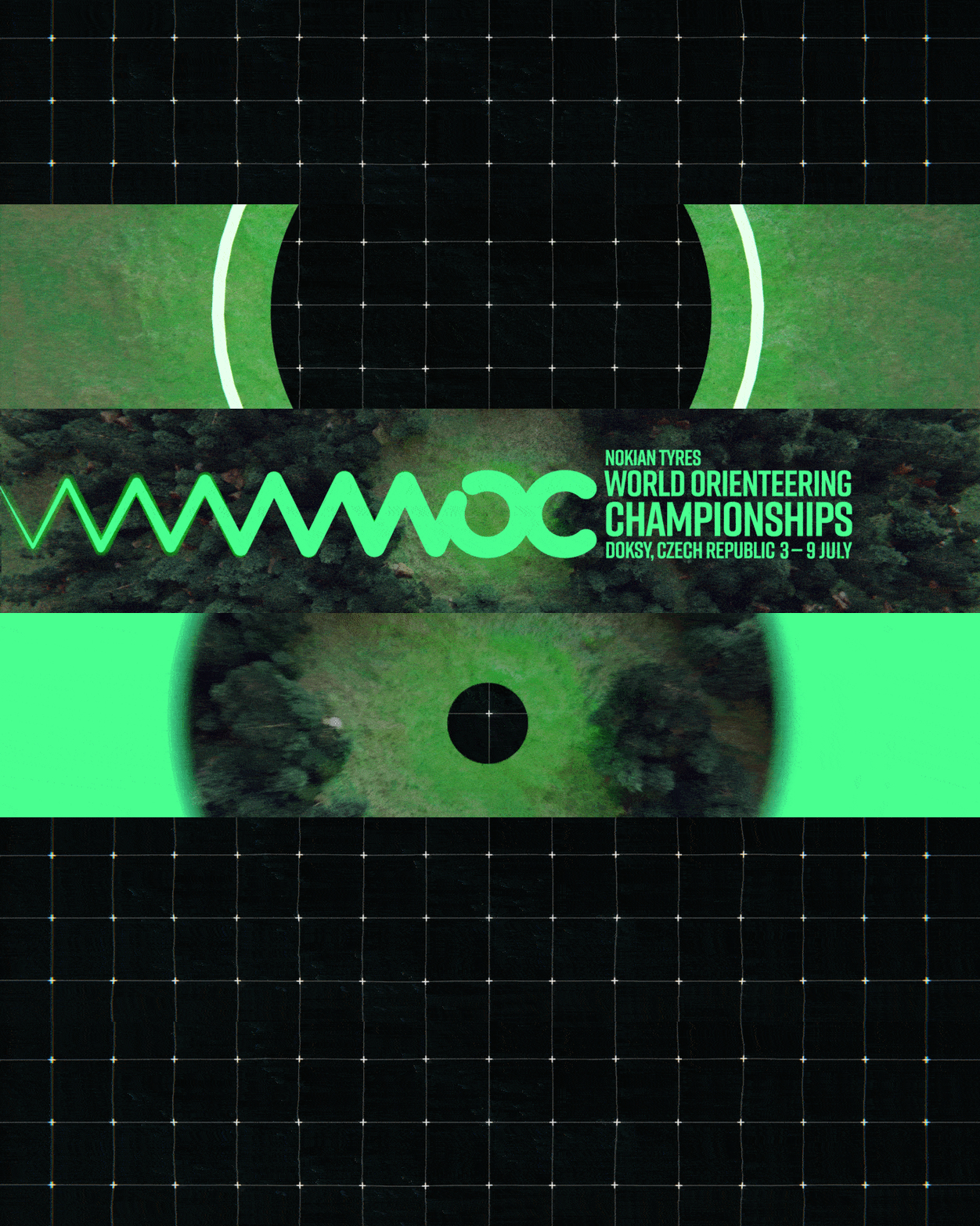
Brand identity
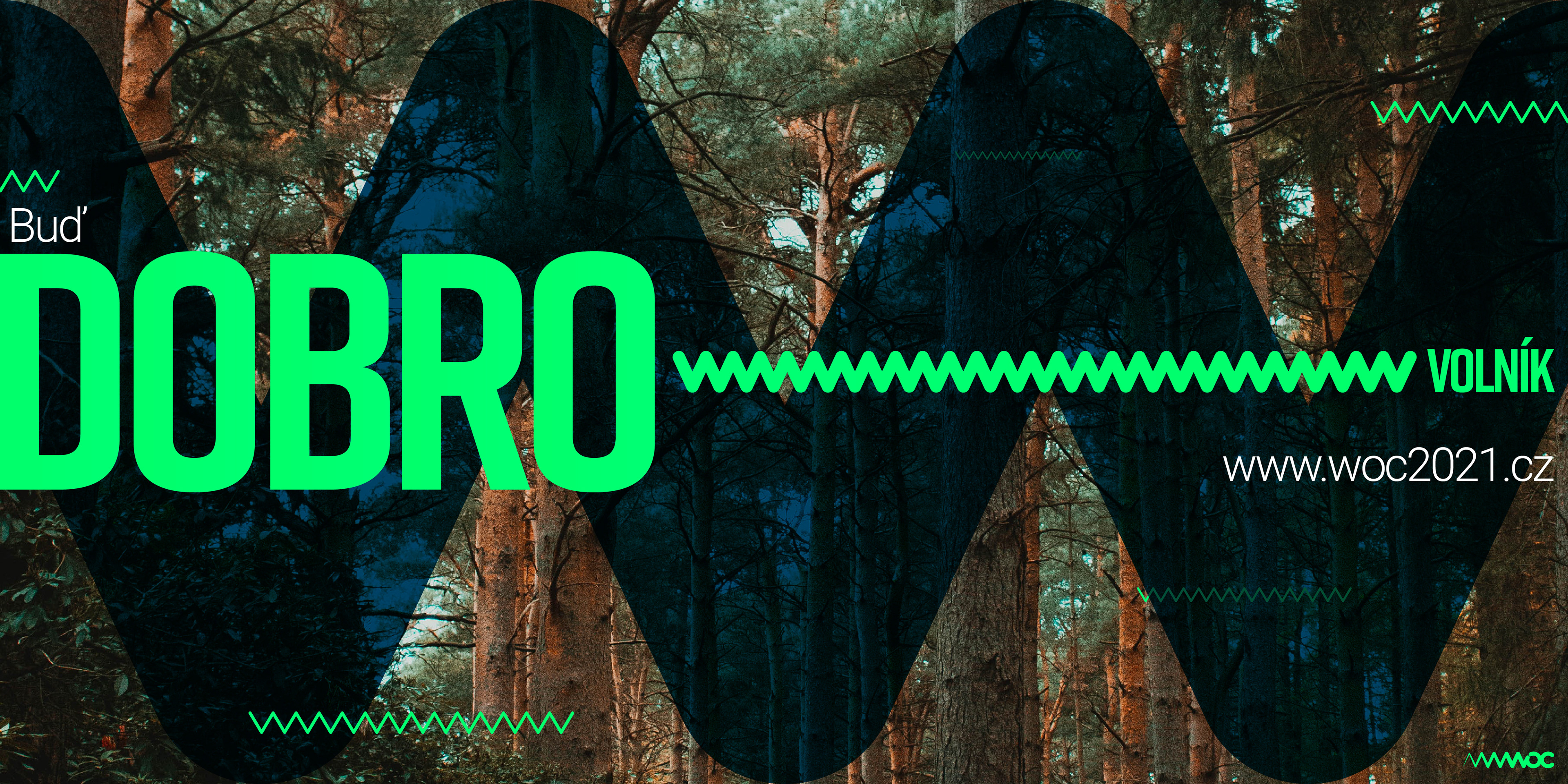
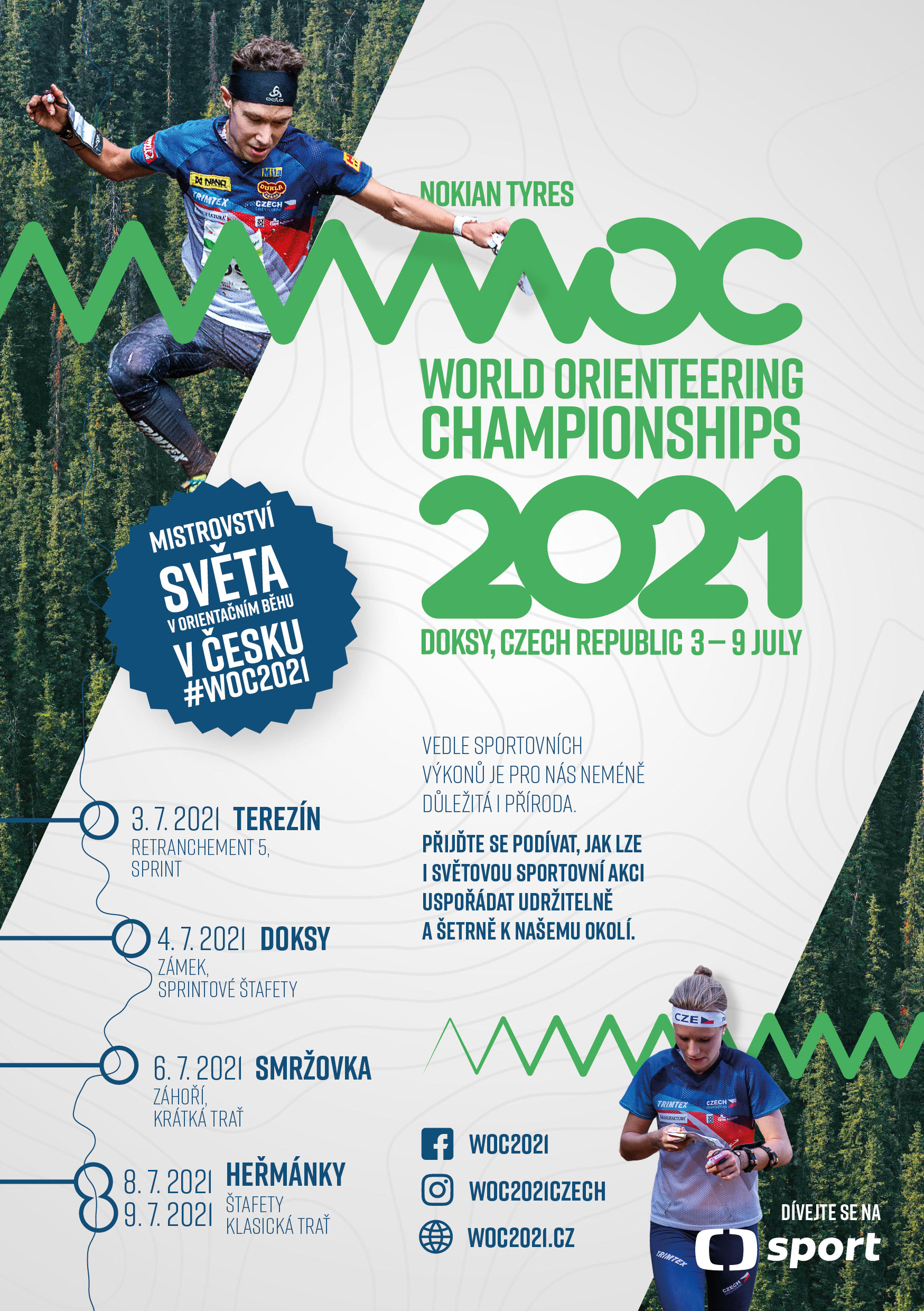
Some of the best creative briefs come disguised as sport. In 2018, the WOC2021 organising committee asked me to build a brand identity for the World Orienteering Championships — an event three years away, with the ambition of becoming the most ecologically conscious orienteering event ever held.
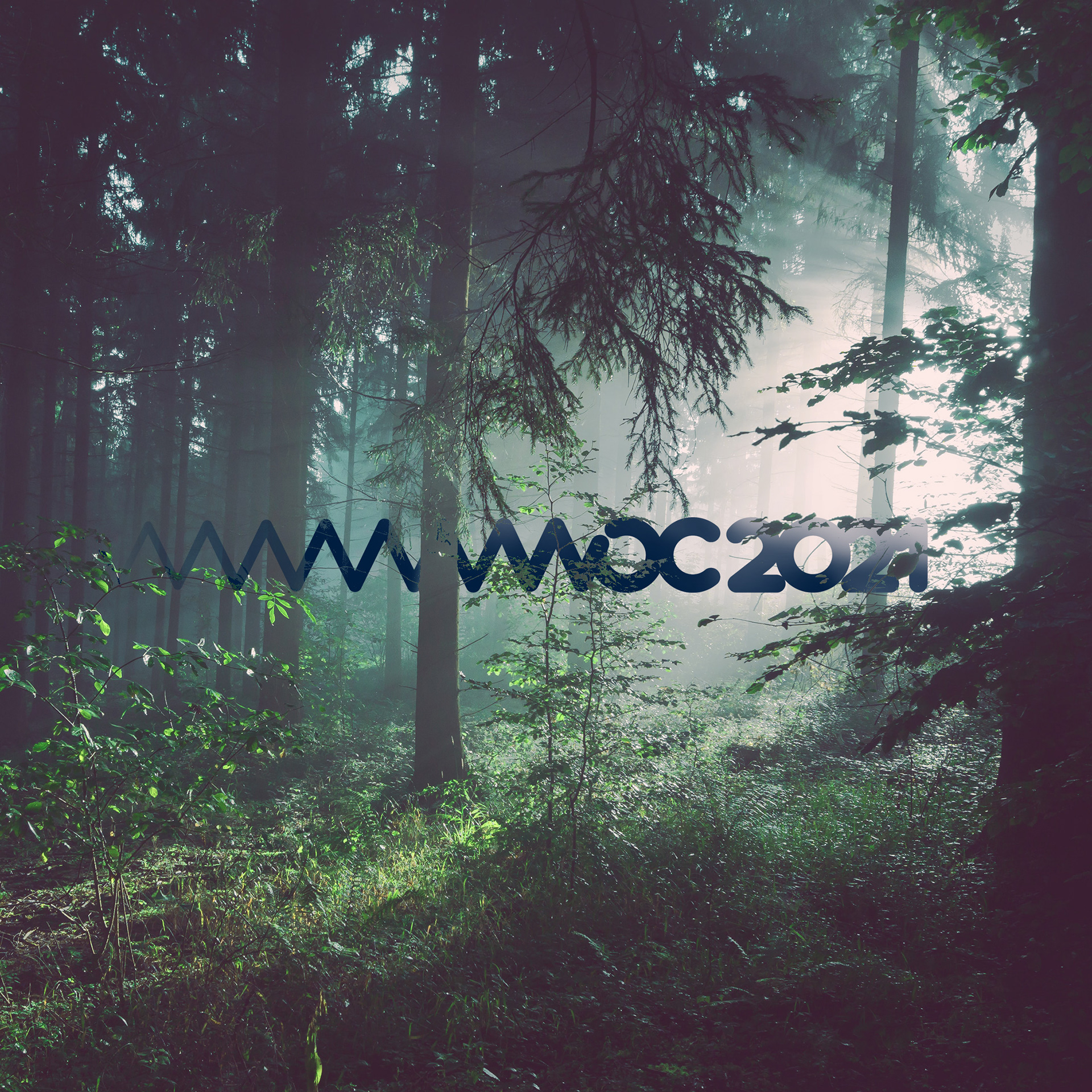
I'm an orienteer. I know what it feels like to stand at a fork in a forest with thirty seconds to make a decision that costs you a medal. That insider knowledge wasn't decoration — it shaped every design choice. The central mark, a continuous wavy line, reads simultaneously as a forest horizon, a heart rate monitor mid-race, and a runner scanning for the next control point. It transforms into the custom WOC logotype in a single fluid motion. Simple enough for a volunteer to reproduce correctly on a banner at 6am. Distinctive enough to hold its own on a world stage.
Over three years, I developed every application of the brand — digital, print, environmental — maintaining visual coherence across a team of people I'd never all met at once. The mark held. The community adopted it, started drawing it themselves. That's when you know a brand identity has taken root.
Motion graphics
Orienteering is notoriously hard to broadcast. The sport happens in a forest. The decisive moments are invisible. A route choice made in three seconds, a compass bearing held through undergrowth, a control found or missed by two metres. Television has never quite known what to do with it.
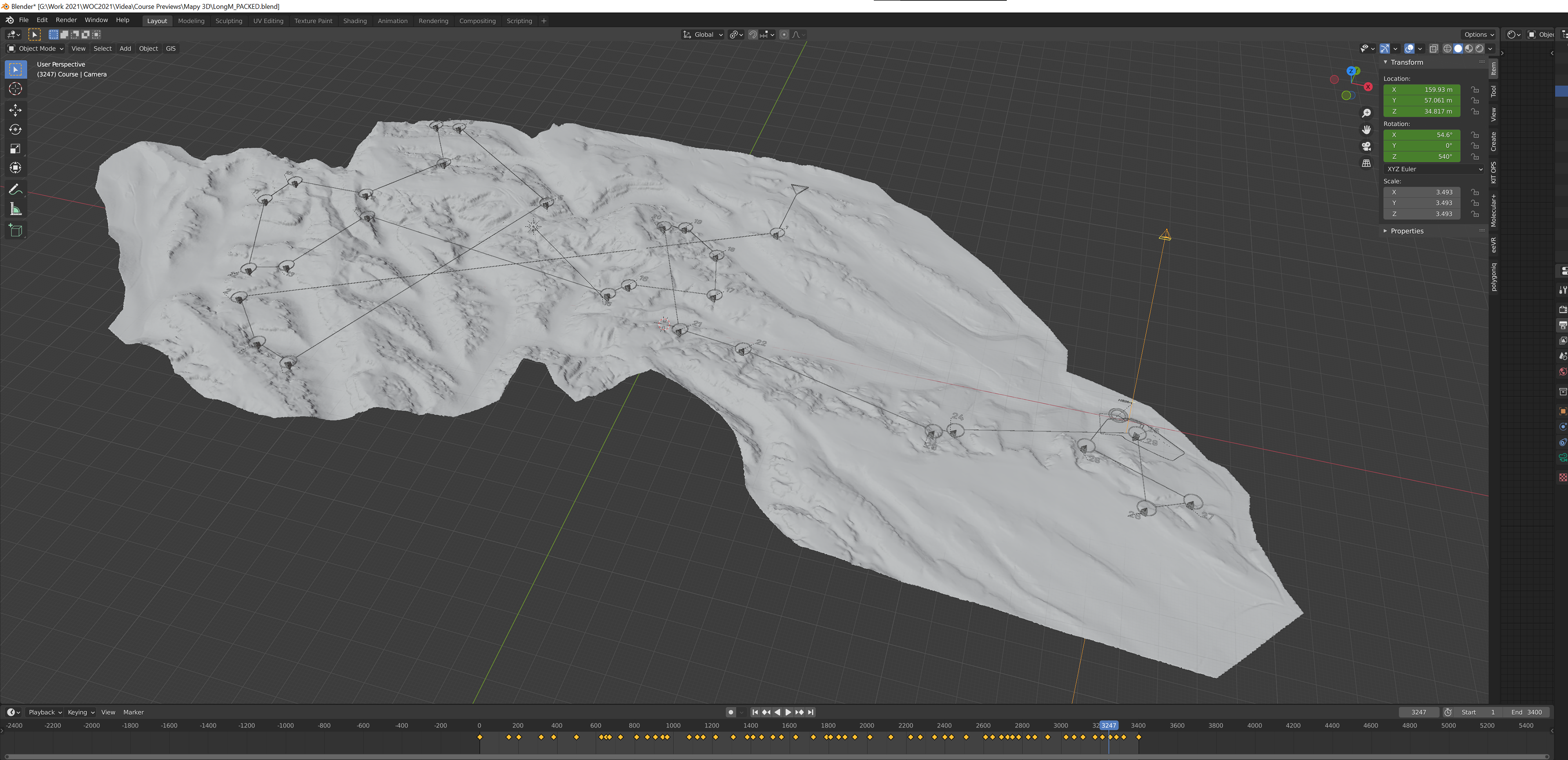
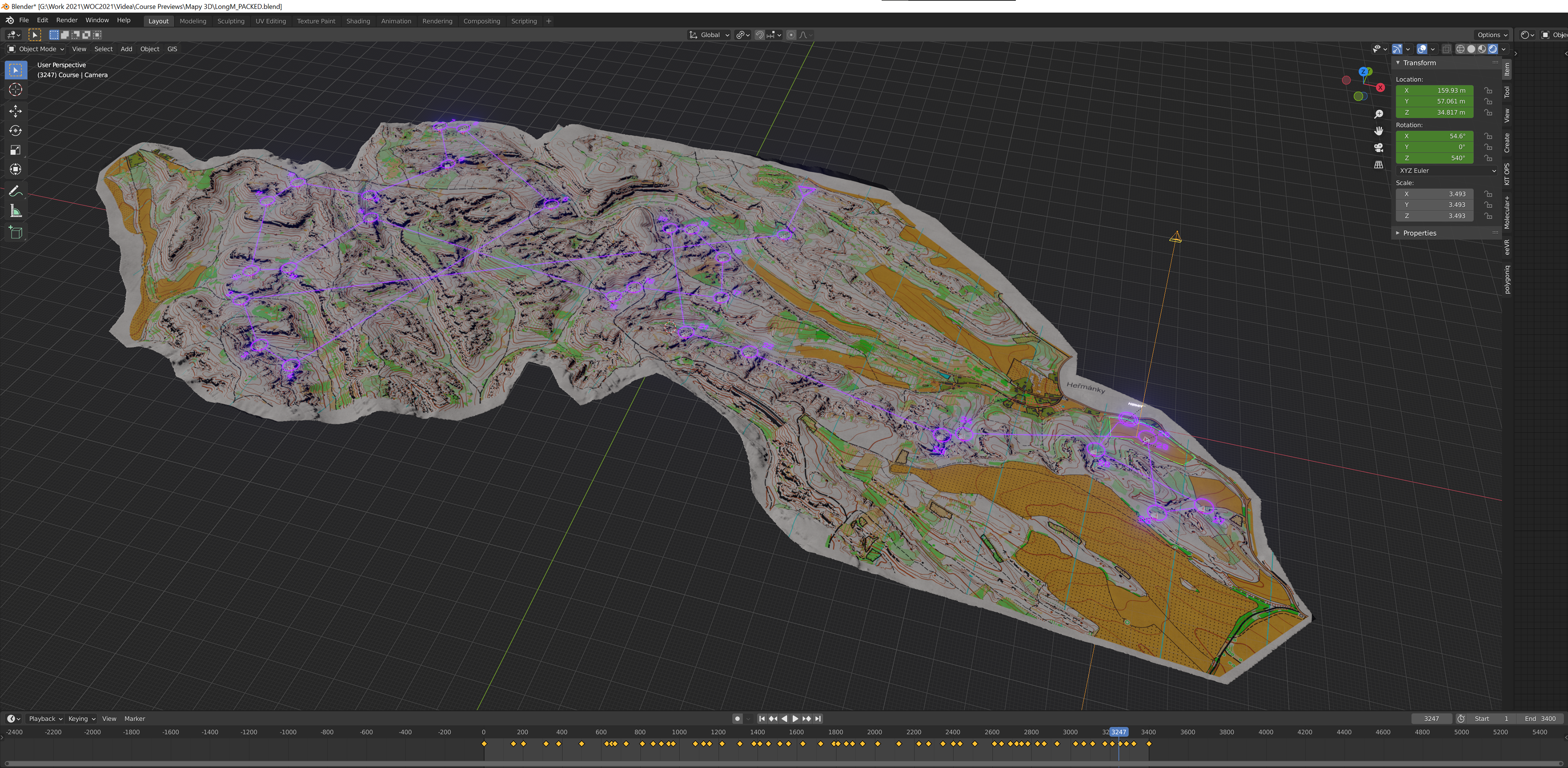
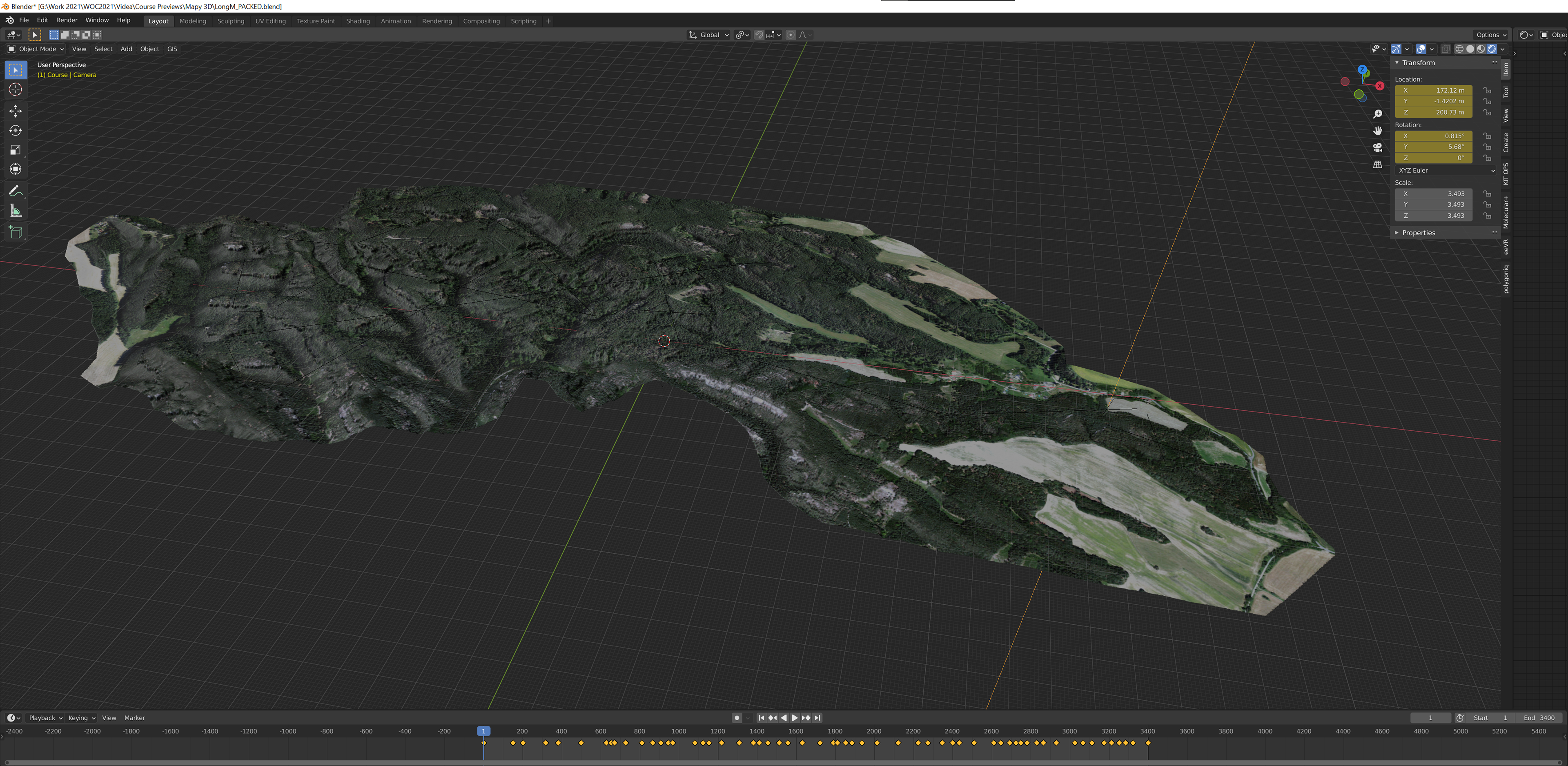
I built a solution from the inside out. Using laser-scan terrain data provided by the map-making team, I reconstructed each race course in 3D and animated route choices, real forest textures, the physical relationship between the abstract map and the actual ground. A custom shader handled the transition between them. A compass overlay tracked athlete position in real time against the footage. None of this had been done for orienteering before.
It worked because I wasn't solving a production problem. I was solving a comprehension problem - one I'd experienced personally every time I'd tried to explain to a non-orienteer why the sport is so compelling. The 3D previews made that case without needing a commentator.
Aftermovies
The brief for the after movies was simple and brutal: one film per race day, delivered within 24 hours of the finish line. Then one feature-length film covering the entire championships.
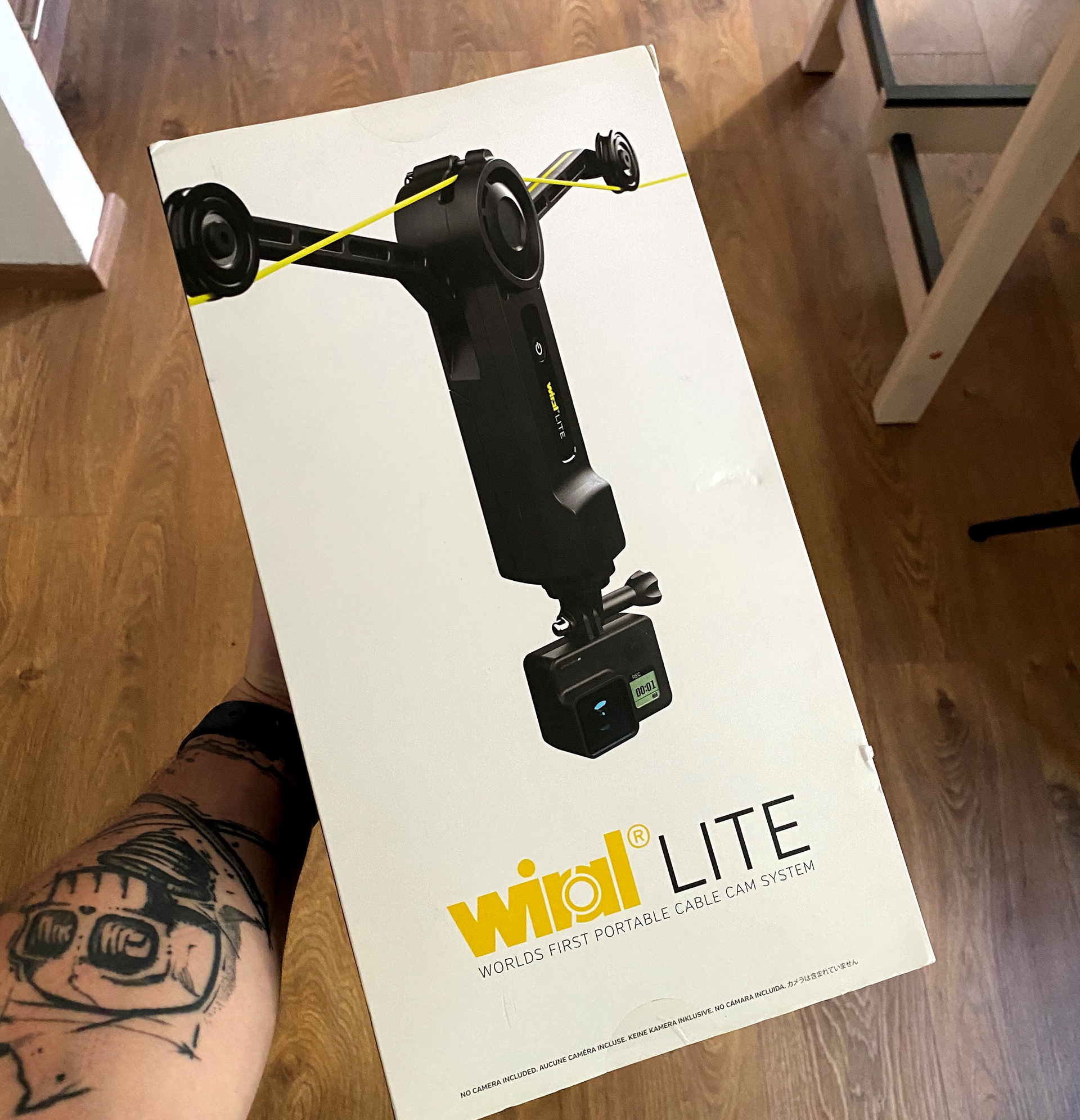
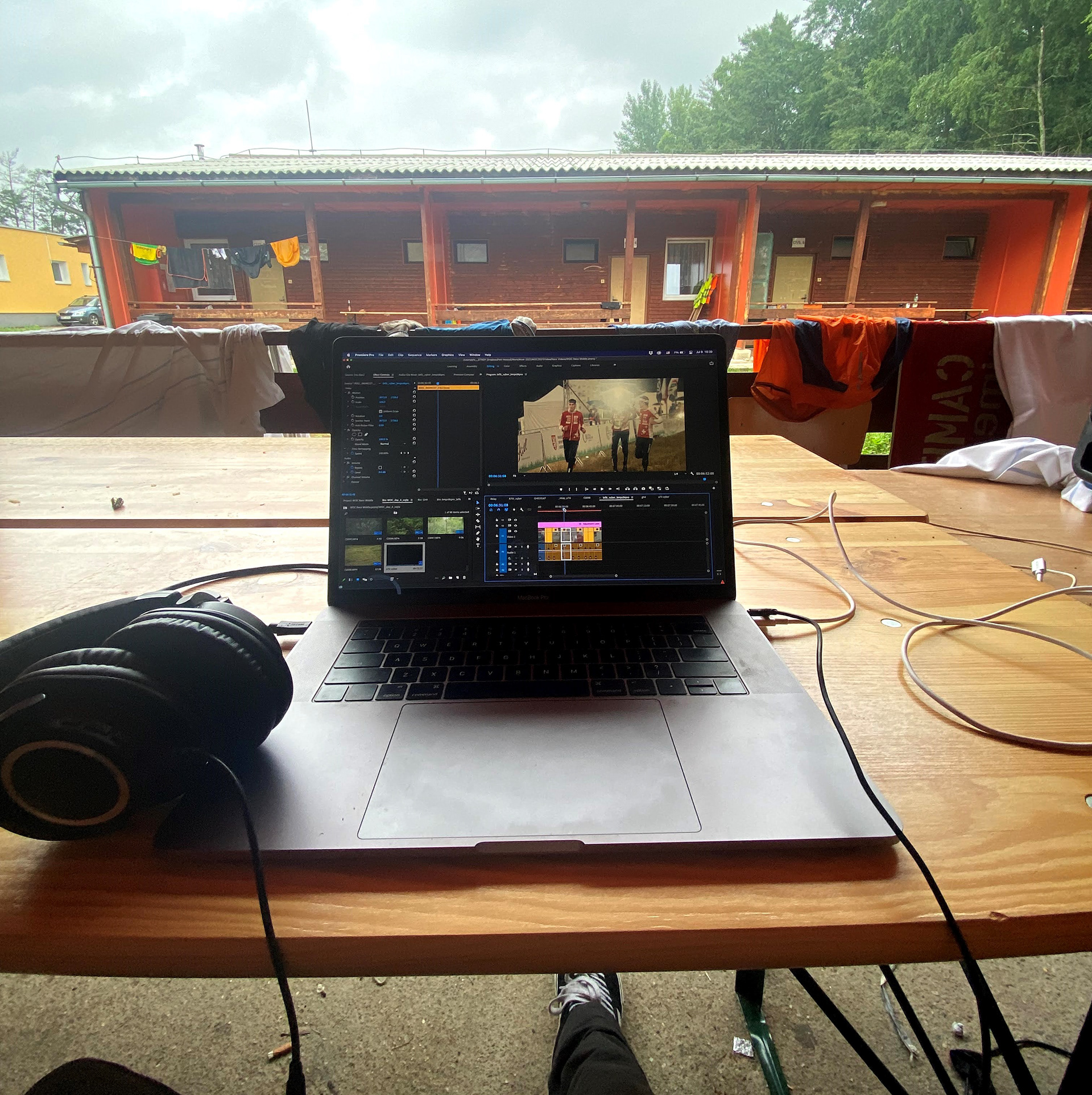
I assembled a crew, built a multi-camera setup that included aerial, gimbal, wire-cam and 360° coverage, and we shot everything. The edit happened on laptops at the venue with spotty internet, mountains of mixed codecs from six different cameras, and a clock that didn't care about colour grading problems.
What came out the other side was 60+ minutes of broadcast-quality content that the athletes, the federation, and the partners still use. The tight conditions weren't the obstacle — they were the proof. Anyone can make something good with time and resources. Making something good when you have neither is a different skill entirely.
Video Production Breakdown
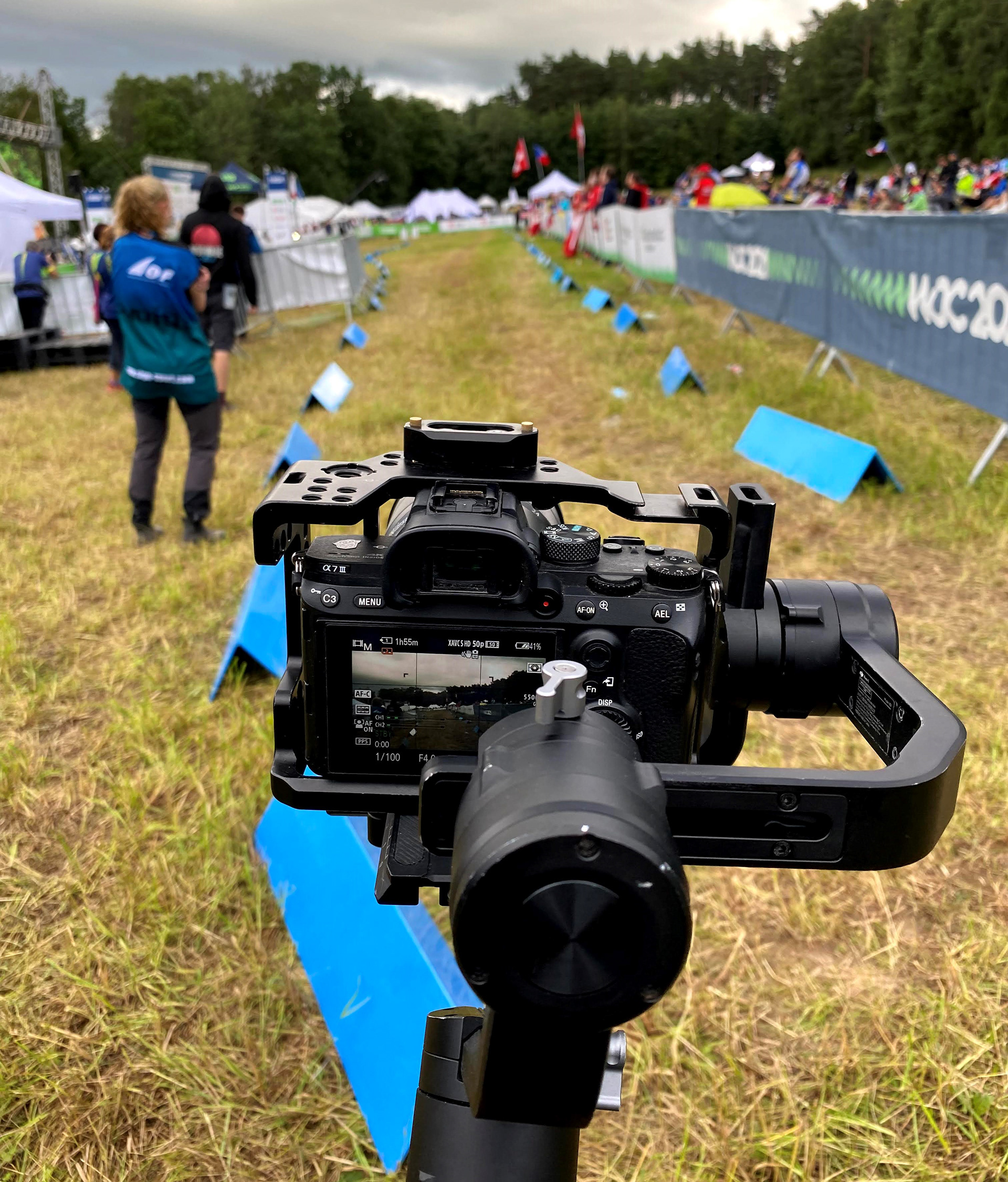
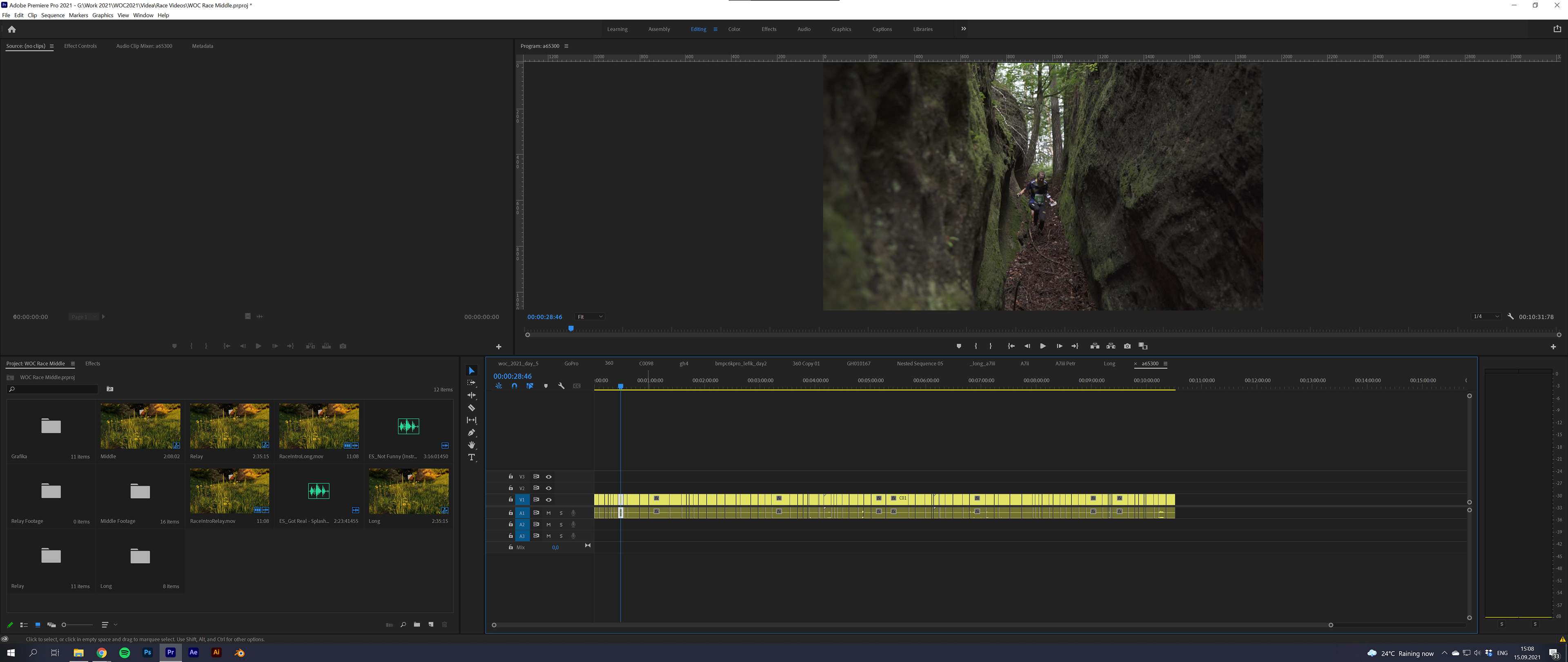
Apart from usage of the heavily CGI TV package that was made before hand, everything was done within 24 hours from the end of the race. That said, it was a rather overkill when it comes to the number of cameras and gadgets. But all was in the name of exploration to find new unseen angles and techniques to capture orienteering and its beauty. At our disposition at one point was 2x BMPCC 4K/6K, 2x Sony A7III with gimbals, Sony A7II, Sony a6500, Sony a6300, GoPro Hero 9, Insta 360 2X on a wire-cam, DJI Mavic 2 and all that with huge variety of lenses and accessories. That was definitely world's first but brought couple of complications for such a fast turnaround - huge amount of data and vast variety of color profiles and codecs. Even though we were trying to tweak all the settings to similar looking output it wasn't an easy task to color grade the final piece to match perfectly under 24h. Editing on the go was a challenge with just notebooks at hand and spotty connection, but we managed to accomplish what we said out to do.
Video crew: Petr Hostaš, Jan Hubáček, Lev Seidl, Jan Čermák, Vojta Illner, Daniel Vandas, Vít Zakouřil, Matyáš Štrégl
Summary
WOC2021 was the project that confirmed something I'd suspected: the best work happens when you genuinely understand the world you're making things for. Not as an observer. As someone who has stood in that forest, made that wrong turn, and felt what it costs.
Brand identity, motion systems, broadcast graphics, film direction — full pipeline, three years, one event. The kind of project that only comes along when the brief and the person are exactly the right match.